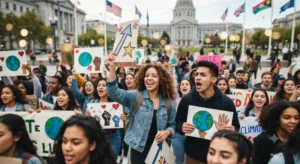
Young voters are becoming an increasingly important part of political discussions around the world. Generation Z, generally referring to people born between 1997 and 2012, is growing into voting age and entering political conversations through social media, online communities, educational institutions, and public campaigns. Their expectations, concerns, and communication styles are influencing how political parties connect with the public. From climate change and employment opportunities to education, technology, and equality, younger generations are bringing new priorities into political debates. But can young voters genuinely change the future of politics? Their growing participation suggests that they have the potential to make a meaningful difference.
1. Young Voters Bring New Perspectives
Younger generations often approach political and social issues with different experiences and expectations from older voters.
They may place greater attention on subjects such as affordable education, career opportunities, environmental protection, digital privacy, mental health awareness, and technological development.
These priorities encourage political parties to consider issues that directly affect younger citizens.
When young voters participate actively, they can influence which subjects receive greater attention during election campaigns.
2. Social Media Is Changing Political Awareness
Social media platforms have transformed how younger generations access political information.
Instead of depending entirely on television debates and traditional newspapers, young people can follow political discussions through short videos, podcasts, online interviews, and digital news platforms.
Platforms such as Instagram, YouTube, and X allow politicians to communicate directly with potential voters.
Social media also makes it easier for young people to discuss public issues, organise campaigns, and share information with larger audiences.
However, misinformation and misleading political content remain important challenges. Young voters need to verify information before accepting or sharing it.
3. Employment and Economic Opportunities Matter
Employment is one of the major concerns influencing younger voters.
Many young people are interested in policies related to job creation, entrepreneurship, skill development, affordable housing, and economic stability.
In countries with large youth populations, political parties often focus on employment opportunities because young citizens represent an important part of the future workforce.
Policies that support startups, vocational education, technology training, and business development can attract younger voters who want better career opportunities.
4. Climate Change Is Becoming a Political Issue
Environmental protection is another subject that attracts attention from younger generations.
Climate change, air pollution, water shortages, deforestation, and extreme weather events are concerns that can affect people’s future quality of life.
Young voters may support political leaders who promote renewable energy, sustainable transportation, environmental protection, and responsible resource management.
Youth-led environmental movements have also helped bring climate-related discussions into public and political spaces.
5. Young Voters Can Influence Election Results
In close elections, even a relatively small change in voter participation can influence the final outcome.
When young people register to vote and participate in large numbers, they can become an important electoral group.
Political parties often study voter preferences to understand which issues matter most to different age groups.
If younger voters consistently support candidates who address their concerns, parties may become more responsive to those priorities.
However, the actual influence of young voters depends on turnout, electoral systems, constituency demographics, and the distribution of votes.
6. Youth Participation Goes Beyond Voting
Changing politics does not always require becoming a political candidate.
Young people can contribute through volunteering, community initiatives, student organisations, public discussions, and social campaigns.
They can also participate in local governance meetings, contact elected representatives, and raise awareness about important public issues.
Some young citizens choose to enter politics directly by joining political organisations or contesting local elections.
These activities allow them to contribute to public decision-making even between election cycles.
7. Political Parties Are Adapting to Younger Audiences
Political parties increasingly recognise that young voters have different communication habits.
Many parties use digital campaigns, online discussions, youth events, and social media content to reach younger audiences.
They may also introduce younger candidates or create youth-focused organisational groups.
However, attracting young voters requires more than online popularity. Political organisations must also demonstrate that their policies address real concerns such as education, employment, public safety, and economic opportunities.
8. Challenges That Young Voters Face
Despite their growing influence, young voters face several challenges.
Political misinformation, limited awareness of government policies, unemployment, lack of representation, and distrust in political institutions can discourage participation.
Some young people also feel that their opinions do not receive enough attention from established political leaders.
Civic education, open discussions, transparent governance, and easier access to reliable information can help address these challenges.
9. The Future of Politics May Be More Youth-Driven
As more members of Generation Z reach voting age, their influence is likely to become increasingly important.
Their interest in technology, digital rights, employment, education, and environmental sustainability may encourage political institutions to adapt.
At the same time, young voters are not a single group with identical opinions. Their political preferences differ according to country, culture, economic background, education, and personal experiences.
This diversity makes it important for political parties to understand young citizens rather than treating them as one uniform voting group.